

The political relationship between Lindsey Graham and Donald Trump is one of the stranger documented partnerships in recent American history.
It ran from open contempt in 2015 to strategic alliance by 2017, through multiple crises that seemed like they might end it, and emerged intact each time. Understanding how that happened requires going through it chronologically.
For Graham's broader record, see his full biography and account of his major controversies.
Phase One: Enemies (2015–2016)
Graham ran against Trump in the 2016 Republican primary. He did not run a polite losing campaign.
He called Trump "a race-baiting, xenophobic religious bigot" and "a complete idiot." He endorsed Jeb Bush, then Ted Cruz.
When Trump won the nomination, Graham did not endorse him. After Trump won the general election, Graham was publicly critical during the transition period.
Graham's objections during this phase were substantive: he disliked Trump's rhetoric on Muslims, his foreign policy isolationism, his criticism of NATO, and his apparent warmth toward Vladimir Putin. These were policy differences, not just tactical ones.
Phase Two: Strategic Accommodation (2017–2019)
Somewhere in the first year of the Trump presidency, Graham made a calculation. He began spending time with Trump — golfing, visiting the White House, and publicly defending the administration's decisions.
Journalists who covered this transition noted that it happened gradually, without a clean break from his previous position.
The explanation Graham offered was that the alternative to working with Trump was irrelevance.
He could maintain his principles in opposition and accomplish nothing, or he could build a relationship with the president and try to shape policy from inside the circle of trust.
He used that access to push his foreign policy priorities — sustained commitment to NATO, support for Ukraine, pressure on Iran — in an administration that had isolationist impulses.
Critics called it rationalization. Supporters called it political realism.
Phase Three: The Impeachments (2019–2021)
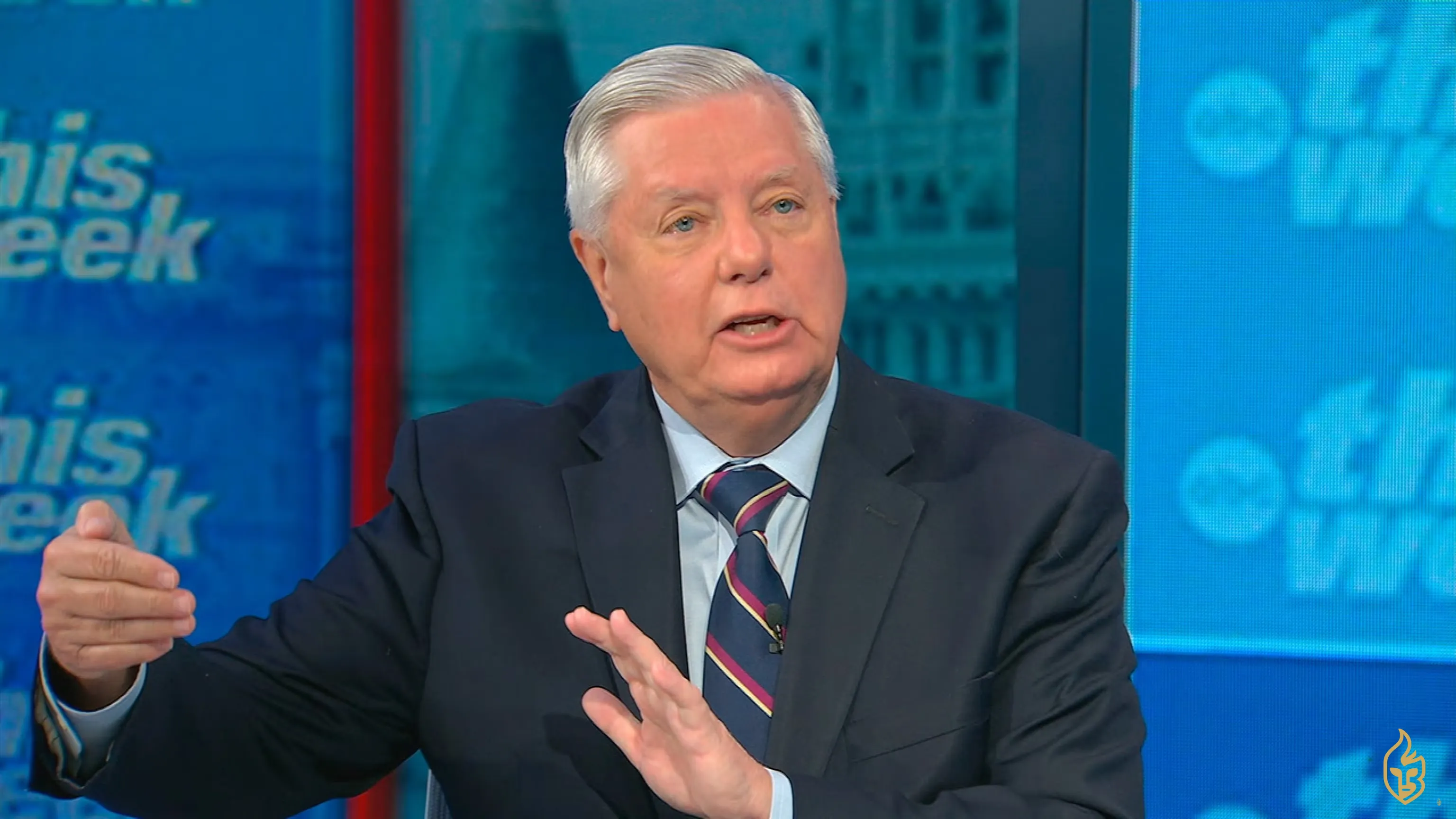
When Trump was impeached by the House in 2019 (Ukraine phone call) and 2021 (January 6), Graham voted to acquit him both times.
His defense of Trump during the first impeachment was particularly vigorous — he was simultaneously investigating the Biden-Ukraine matter that Trump had raised in the call that led to the impeachment.
The second impeachment vote came after January 6, 2021, when Graham gave an emotional floor speech saying the president had taken things "too damn far." He voted to certify the election results that night.
Then, within weeks, he was at Mar-a-Lago with Trump, and within months he was back to defending him publicly.
Phase Four: The Final Years (2021–2026)
After 2021, the alliance held. Graham continued to be one of Trump's most reliable Senate voices, defending him in legal controversies, supporting his policy positions, and appearing at campaign events. His public statements during this period showed little of the earlier ambivalence.
When Trump ran in 2024 and won again, Graham's early investment in the relationship paid off in the sense that his access and influence were preserved.
Whether that access translated into policy outcomes he could not have achieved otherwise is harder to demonstrate concretely.
Trump's Tribute After Graham's Death
Trump's statement after Graham's death on July 11, 2026, was among the most effusive of any public tribute — warm, personal, and unambiguous in its affection.
Whatever the private tensions of their relationship, the public face of it at the end was genuine mutual appreciation.
Graham's full political legacy will require a reckoning with this relationship — whether the alliance served his stated goals, and at what cost to his earlier positions on character and principle.