

Few American politicians generated contempt from as many different directions as Lindsey Graham. The left disliked him for his support of military interventions and his alliance with Donald Trump.
The populist right distrusted him for years of establishment Republican positioning.
Even within his own party, he was sometimes viewed as opportunistic. Understanding why requires a look at the specific decisions that drove those reactions.
The Criticism from the Left
For progressives and anti-war Democrats, Graham's record was a consistent source of anger.
He supported the invasion of Iraq in 2003 and never offered a meaningful recantation of that position even as the war became widely viewed as a catastrophic failure.
He backed the invasion of Afghanistan, the surge in Afghanistan, and the extended occupation that lasted two decades.
His advocacy for military intervention across multiple theaters — Libya, Syria, Iran, Ukraine — marked him in their view as a reflexive hawk who defaulted to military solutions.
His role in the 2017 and 2020 Supreme Court confirmation hearings made him a particular target of liberal fury.
During the Brett Kavanaugh hearings, he delivered an angry floor speech defending Kavanaugh that became a viral flashpoint.
After Justice Ruth Bader Ginsburg died weeks before the 2020 election, Graham reversed his own stated position on filling a Supreme Court seat in an election year — he had said in 2016 that it should not be done, but supported the confirmation of Amy Coney Barrett. Critics called it a straightforward betrayal of principle.
The Criticism from the Right
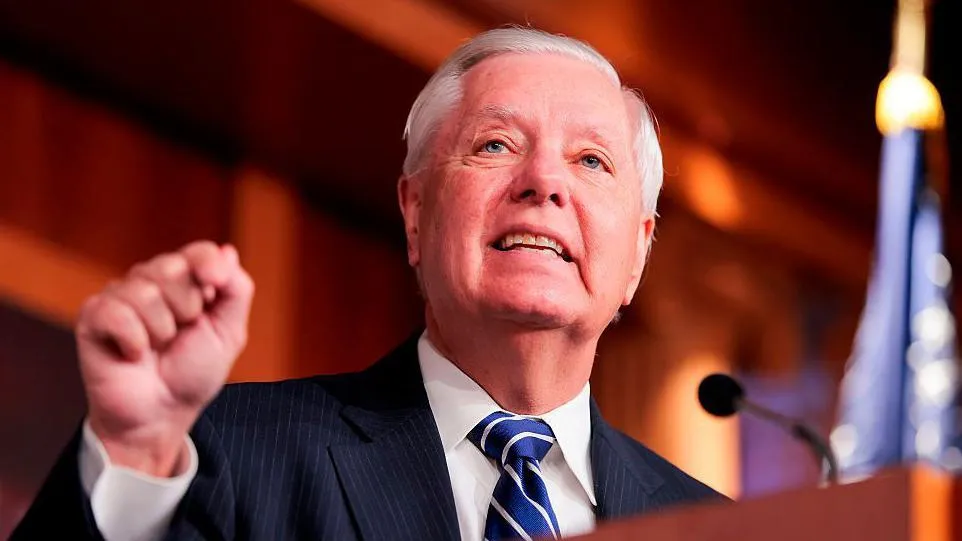
The nationalist and populist wing of the Republican Party that grew in influence after 2016 had long distrusted Graham.
Before his alliance with Trump, he had been associated with what his critics on the right called "globalism" — support for free trade agreements, immigration reform legislation, and multilateral foreign policy through institutions like NATO and the United Nations.
His 2013 immigration bill, co-authored with Democratic Senator Chuck Schumer and four others in the bipartisan "Gang of Eight," would have created a pathway to legal status for millions of undocumented immigrants.
It passed the Senate 68-32 and died in the House. Conservative critics never forgave him for it. When Trump rose to power by making immigration restriction a central message, Graham's immigration record made him a target.
The Shape-Shifting Charge
The criticism that cut deepest — across the political spectrum — was about consistency. During the 2016 Republican primary, Graham called Trump "a race-baiting, xenophobic bigot" and a "complete idiot."
After Trump won the presidency, Graham became one of his most reliable Senate allies. His relationship with Trump went through multiple phases, but his critics argued the overall arc amounted to abandoning principle for political survival.
When Trump was impeached by the House in both 2019 and 2021, Graham voted to acquit him both times.
After January 6, 2021, Graham gave an emotional Senate floor speech saying "enough is enough" and suggesting Trump bore responsibility for the Capitol attack.
Within weeks, he was back at Mar-a-Lago with Trump and back to defending him. That sequence became a defining image of Graham for many observers.
The "Best Money We Ever Spent" Remark
In 2023, during a Kyiv visit, Graham was caught on camera telling Ukrainian legislators that the money spent on the war was "the best money we've ever spent" because it was killing Russians without deploying American troops.
The remark was criticized across party lines. Anti-war voices said it was callous and dehumanizing. Some Ukraine supporters said it undermined the moral case for assistance by framing it in purely transactional terms. It contributed to Russia's decision to issue a criminal arrest warrant against him.
Multiple Perspectives
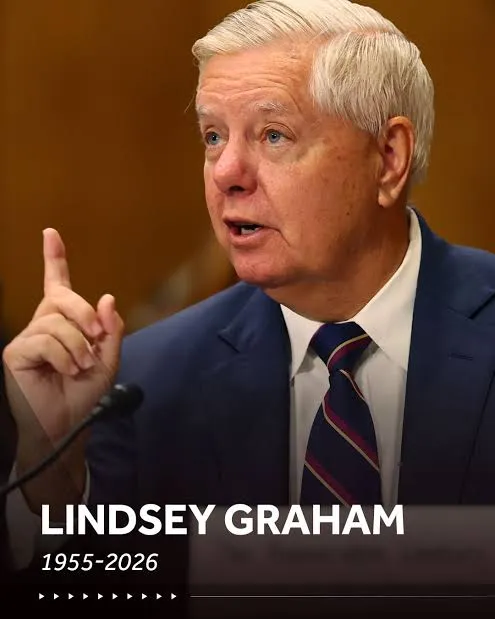
This article presents documented criticism from multiple sources. It does not endorse any particular view of Graham's record.
Those who admired him made counterarguments to most of these criticisms — an account of why many Americans considered him a patriot covers that perspective. His full biography and political legacy provide broader context.
Frequently Asked Questions
Why did liberals dislike Lindsey Graham?
Primarily because of his support for military interventions, his role in Supreme Court confirmations, and his alliance with Donald Trump.
Why did some conservatives distrust Lindsey Graham?
Many on the populist right criticized his immigration reform work, his globalist foreign policy positions, and what they viewed as establishment Republican tendencies before his Trump alliance.