
Chiwetel Ejiofor was born on July 10, 1977, in the Forest Gate district of London, to Nigerian parents of Igbo descent who had emigrated to England during Nigeria's civil war of 1967-70.
His father, Arinze Ejiofor, was a doctor. His mother, Obiajulu Justina, was a pharmacist.
The family represented the professional-class Nigerian immigrant experience — educated, hardworking, committed to building a life in Britain while maintaining connection to the Igbo culture and language they had carried with them.
At age eleven, Ejiofor lost his father in a car accident during a family visit to Nigeria.
The impact of that loss on a young person with a quiet, observational temperament goes some way toward explaining the quality that defines his acting: an ability to sit with grief and restraint in a way that communicates more than expressiveness typically does.
Training and Theatre
Ejiofor attended Dulwich College in South London, then went to the London Academy of Music and Dramatic Art (LAMDA) on a scholarship.
His entry into professional acting happened unusually early. At nineteen, while still a student, he was cast in Steven Spielberg's Amistad (1997).
The film required him to speak in Mende — a language indigenous to Sierra Leone — which he learned specifically for the role. That kind of commitment became his trademark.
Stage, Film, and the Long Game
Ejiofor built his reputation across both theatre and film through the 2000s. He starred in Kinky Boots on stage, in Dirty Pretty Things and Inside Man on film, and accumulated a body of work that marked him as one of the most technically assured actors of his generation.
The performance that defined his international profile came in Steve McQueen's 12 Years a Slave (2013), where he played Solomon Northup — a free Black man kidnapped and sold into slavery in the antebellum American South.
The performance earned him Academy Award and BAFTA nominations for Best Actor. Its emotional intelligence, its refusal to seek sympathy at the expense of dignity, set a standard for how historical trauma should be handled on screen.
The Marvel Universe and Beyond
In the MCU, Ejiofor plays Baron Mordo — a sorcerer who begins as an ally of Doctor Strange and gradually becomes antagonistic.
He appeared in Doctor Strange (2016), Avengers: Infinity War (2018), and Doctor Strange in the Multiverse of Madness (2022).
The role has given him global franchise visibility of a kind that complements rather than diminishes his independent film work.
King Saran
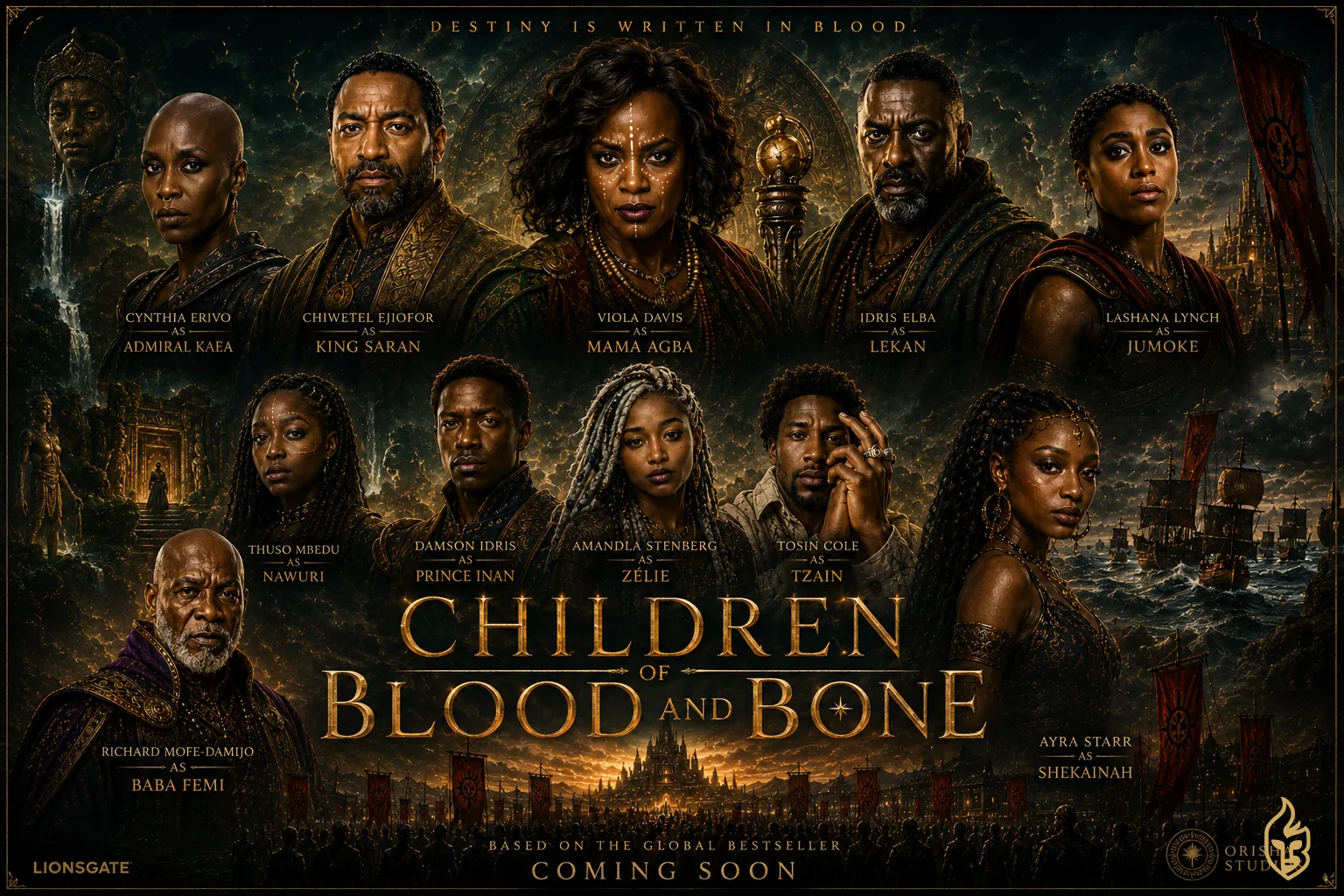
In Children of Blood and Bone, Ejiofor plays King Saran — the man who ordered the massacre of Orïsha's magic users.
He is the story's primary antagonist, but Adeyemi's novel is careful to give Saran internal logic.
He is a ruler driven by fear and a specific kind of political cowardice — the cowardice of a man who destroys what he cannot control.
Ejiofor's particular gift for depicting pain, conflict, and suppression behind a still exterior makes him close to ideal casting.
— FAQ —
Is Chiwetel Ejiofor Nigerian?
He is British, born in London, but of Igbo Nigerian descent. Both of his parents emigrated from Nigeria.
What is Chiwetel Ejiofor's most celebrated role?
His performance as Solomon Northup in 12 Years a Slave (2013) is considered his landmark screen performance.
What is his role in Children of Blood and Bone?
King Saran, the primary villain — the ruler who ordered the genocide of Orïsha's magic users a decade before the story begins.