

When an author publicly separates their name from their own film adaptation, it is almost never one thing. Hollywood conflicts between writers and studios accumulate slowly — through small decisions made without consultation, through script changes that mutilate something the author considered essential, through power dynamics that grow more lopsided as production money gets spent and the point of no return recedes in the rearview mirror.
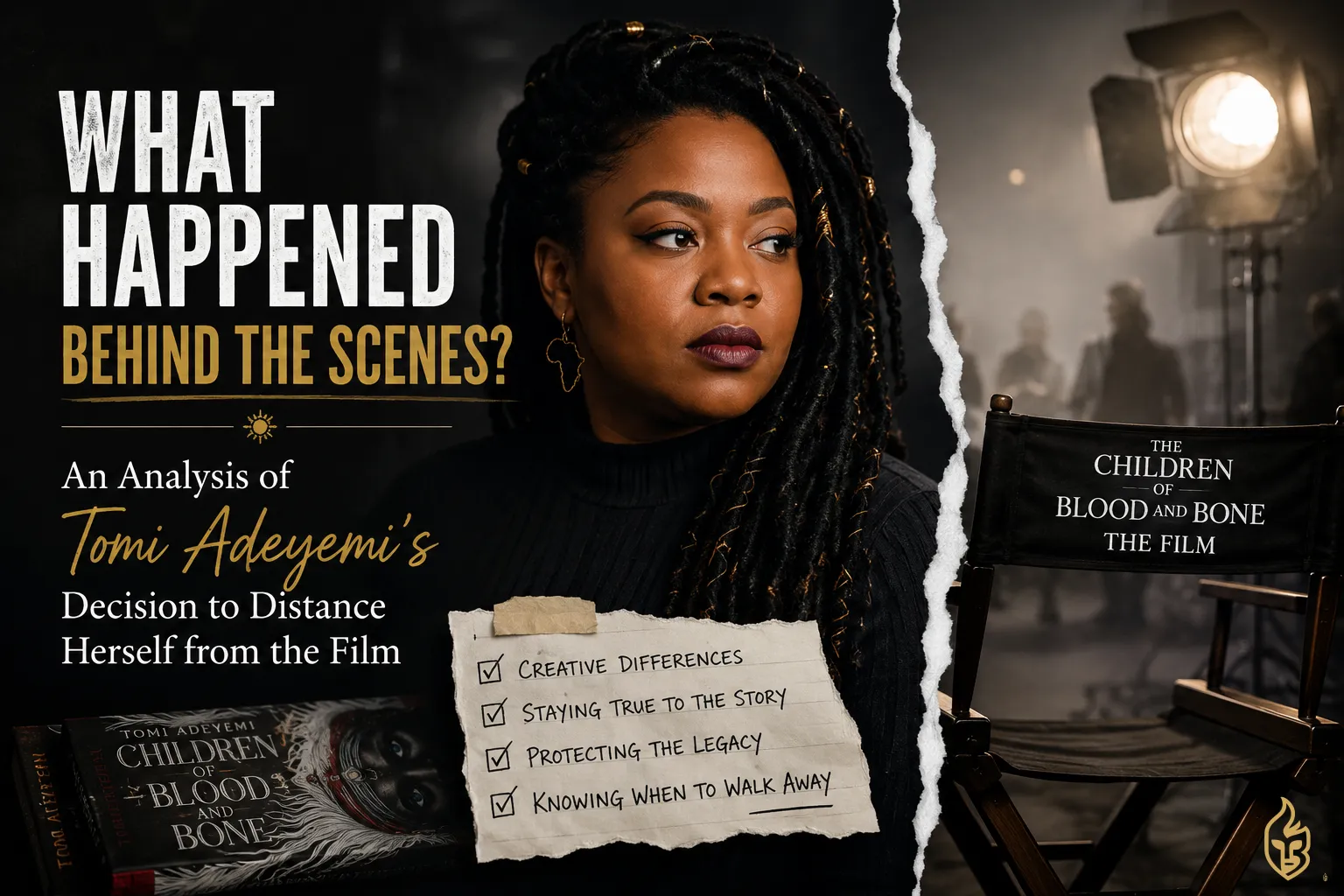
Tomi Adeyemi's July 4, 2026 statement — "I'm just laying down my sword and officially separating my name because I can't keep being hurt and attacked behind the scenes" — reads like the release valve after sustained pressure, not a sudden decision. The use of "keep being hurt" is telling. This was not one incident. It was a pattern.
What follows is analysis, not reporting. No specific sources have publicly named the details of what occurred. What we can do is map what is publicly known against the standard mechanisms through which these conflicts typically develop.
The Screenwriter Problem
Adeyemi was listed as screenwriter on the Children of Blood and Bone adaptation — an uncommon arrangement for a debut novelist.
Most studios hire professional screenwriters to adapt novels, keeping authors at arm's length. Attaching the author signals either an unusually collaborative studio or an author who negotiated firmly.
What screenwriting credits do not guarantee is creative authority. In the Hollywood development process, a writer can draft a script that is then rewritten by another writer — often without the original writer's knowledge or approval — through a process called "polishing" or "uncredited rewrites."
Writers Guild of America arbitration determines final credits, but the original author may find that their screenplay has been substantially altered by the time cameras roll.
Given that Adeyemi spent eighteen months writing forty-five drafts of the novel itself, it is reasonable to assume she brought the same level of intentionality to the screenplay.
If that work was significantly altered without her input, the sense of violation would be real.
Casting as a Flashpoint
The decision to cast Amandla Stenberg as Princess Amari drew immediate pushback from readers who cited the character's dark skin as explicitly stated in the novel.
Colorism in Hollywood casting is a documented issue — lighter-skinned Black actors have historically received more mainstream opportunities, and this pattern playing out in an adaptation explicitly about a dark-skinned protagonist fighting systemic oppression carried an uncomfortable irony that fans were quick to articulate.
Adeyemi did not publicly address the casting controversy directly before her July 2026 statement. This is significant. Authors under contract typically cannot publicly criticise their adaptation's creative decisions without risking legal exposure.
Silence in the face of controversy, from someone who had been otherwise vocal about the project, may have itself been a signal.
The Executive Producer Title
Adeyemi was also listed as executive producer. On paper, this sounds powerful. In practice, executive producer credits in film are notoriously broad — they can mean anything from having genuine creative input to simply being given a title as part of an author's deal.
Without specific contractual language about what decisions the EP role entitles an author to veto or influence, the title can be more symbolic than functional.
If Adeyemi expected an executive producer credit to mean meaningful creative consultation and found instead that major decisions — cast, script changes, marketing framing — were being made without her real involvement, the accumulation of those exclusions would justify exactly the language she used.
What This Tells the Industry
Author-studio conflicts are not unusual, but Adeyemi's public statement is atypical in its directness. Most authors in these situations stay quiet until the film is out and then, if pressed, offer diplomatic non-answers about creative differences.
Going to TikTok before the film releases — effectively warning her own audience before they buy tickets — is a choice that prioritises her relationship with her readers over the studio's marketing interests.
That tells you something about where she felt her loyalties lay, and what she decided mattered more.
The film will release on January 15, 2027. Prince-Bythewood is a talented director. The cast is excellent. The source material is extraordinary.
None of that requires the author's blessing to be true. But readers who love what Adeyemi built will watch the film knowing she wanted no part of this version — and they will make their own judgments about what that means.
— FAQ —
Is this article reporting confirmed facts or analysis?
This is analysis. The only confirmed facts are Adeyemi's July 2026 TikTok statement and the publicly documented details of the adaptation. The mechanisms described represent common patterns in author-studio conflicts, not confirmed accounts of what specifically occurred.
Could Tomi Adeyemi still receive screen credit despite distancing herself?
Screenplay credits in Hollywood are determined by the Writers Guild of America through an arbitration process, not solely by the studio or author's preference. If Adeyemi wrote drafts of the screenplay, she may still receive a writing credit regardless of her public position on the film.