
Amandla Stenberg was born on October 23, 1998, in Los Angeles, California. Their first name — pronounced ah-MAHN-dah — means "power" or "strength" in the South African languages IsiXhosa and Zulu.
Their parents are Karen Brailsford, an African-American spiritual counselor and writer, and Tom Stenberg, who is Danish. Through their paternal grandmother, Stenberg carries Greenlandic Inuit ancestry.
The range of influences in their heritage reflects the range of cultural concerns they have carried into public life.
Early Career
Stenberg began in commercial work, appearing in catalogue advertising and television commercials before breaking into film.
At age thirteen, they were cast as Rue in The Hunger Games (2012), the adaptation of Suzanne Collins's dystopian novel. Rue is a twelve-year-old tribute from District 11 who briefly allies with Jennifer Lawrence's protagonist Katniss before her death — one of the film's most emotionally resonant sequences.
The casting, and particularly the audience response to it, became an early lesson in the dynamics of representation.
When some viewers reacted with hostility to the casting of a Black child in a role the film's production notes themselves indicated was non-white, Stenberg experienced, publicly and visibly, what young Black actors in Hollywood routinely encounter privately.
Activism and Cultural Commentary
In 2015, while still sixteen, Stenberg produced and narrated a short educational video titled Don't Cash Crop My Cornrows, which examined cultural appropriation and the relationship between Black culture and mainstream acceptance.
The video was widely shared and positioned Stenberg as a thoughtful public commentator on race and representation, not merely an actor.
They have been open about their identity, using both she/her and they/them pronouns, and have spoken publicly on issues ranging from police violence to LGBTQ+ rights.
Major Film Work
Their leading role came in Everything, Everything (2017), a romantic drama in which they play a teenager with a rare illness that prevents her from leaving her home. The film was a modest success.
The more significant work came with The Hate U Give (2018), adapted from Angie Thomas's novel about a young Black woman who witnesses the police shooting of her childhood friend.
Stenberg's performance earned critical acclaim and represented a step into the kind of culturally weighted storytelling they seemed built for.
They received an Academy Award nomination for Best Actress for The Eddy (2024), a challenging dramatic role that demonstrated their maturity as a performer.
Children of Blood and Bone and the Controversy
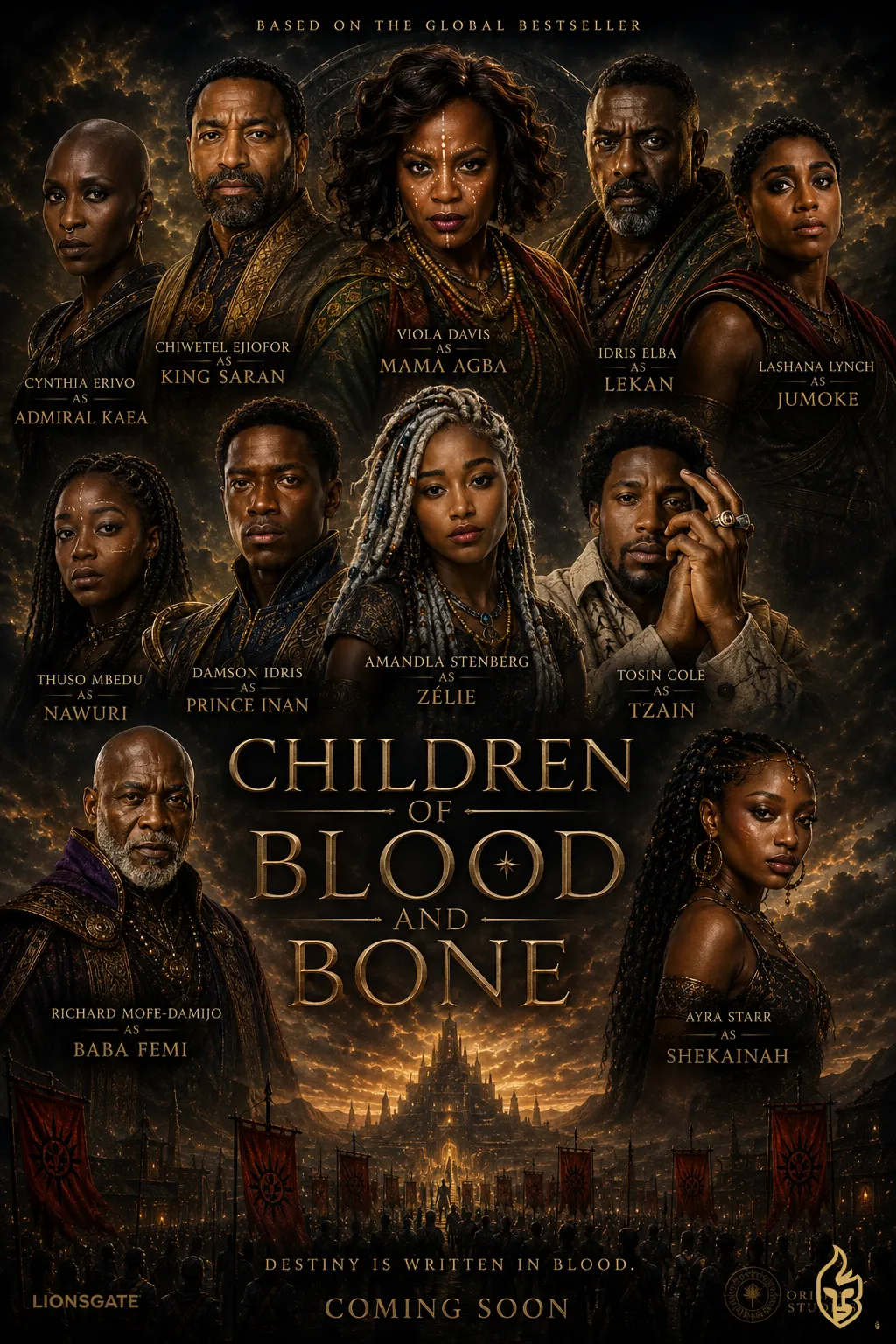
The casting of Stenberg as Princess Amari in the Paramount adaptation drew significant backlash from fans who noted that Amari is explicitly dark-skinned in Tomi Adeyemi's novel, and who argued that a biracial actor with lighter skin does not adequately represent that character's identity.
This debate is part of a broader, ongoing conversation about colorism in Hollywood — the pattern by which lighter-skinned Black actors receive more opportunities than darker-skinned ones, even in productions ostensibly committed to Black representation.
Where Stenberg's casting sits within that conversation involves complexities that go beyond any individual actor's choices, but the criticism was directed at the production as a whole rather than at Stenberg personally by most commentators.
— FAQ —
What does Amandla mean?
"Power" or "strength" in IsiXhosa and Zulu, two South African languages.
What is Amandla Stenberg's best-known role?
Rue in The Hunger Games (2012) first brought them to public attention. The Hate U Give (2018) is generally considered their most critically significant performance to date.
Why was Amandla Stenberg's casting controversial?
Princess Amari is described as dark-skinned in the novel. Stenberg is biracial — of African-American and Danish heritage — and lighter-skinned than Amari as described by Adeyemi.